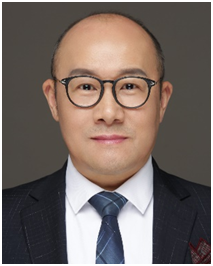
Prof. Gang Pan
York St John University
United Kingdom
Professor Gang Pan FRSC is an internationally recognized environmental scientist whose work integrates fundamental interfacial chemistry with ecological engineering to address eutrophication, harmful algal blooms (HABs), sediment pollution, and climate-relevant greenhouse-gas emissions from aquatic systems.
Professor Pan is the originator of Modified Local Soil (MLS) technology, which established the widely adopted “Floc and Lockâ€paradigm for HAB mitigation and internal nutrient control. MLS enables rapid, ecologically safe removal of algal biomass while permanently immobilising phosphorus and toxins in sediments using locally sourced materials. Independent international reviews in Harmful Algae and Critical Reviews in Environmental Science and Technology have described MLS as a canonical and benchmark approach for lake restoration. The technology has been implemented in more than ten lakes across Asia and evaluated at the policy level in the USA (ITRC guidance), New Zealand (Cawthron Institute national assessment), and China (NDRC testimony). Professor Pan pioneered oxygen nanobubble–integrated MLS systems, extending the paradigm to “Floc, Lock, and Oxygenate.†This innovation resolves sediment anoxia, suppresses methylmercury formation, immobilises arsenic, and significantly reduces methane emissions. His work also provided foundational experimental evidence for the stability and functionality of nanobubbles at particle–water interfaces, now widely cited across environmental science, physical chemistry, and engineering. At a fundamental level, Professor Pan developed Metastable-Equilibrium Adsorption (MEA) theory, which overturned the classical property of the equilibrium adsorption constant by demonstrating the role of multiple metastable states. MEA has improved predictive modelling of contaminant transport, adsorption irreversibility, and particle concentration effects in natural systems, with applications spanning geochemistry, soil remediation, and nuclear waste safety. Prof. Panfurther developed the Integrated Water–Energy–Food (iWEF) framework, demonstrating how eutrophic waters and algal biomass can be transformed into bioenergy, functional fertilisers, and engineered biochars, thereby closing phosphorus cycles and supporting circular-economy solutions aligned with SDGs 6, 13, and 14. Professor Pan has published over 400 peer-reviewed papers(h-index 69) and received major national awards, includingFirst Prizes of the Chinese National Dayu Awardand National Environmental Science & Technology Award. He has held senior academic leadership roles in China and the UK, andsupervised more than 80 postgraduate researchers. Since 2016, Professor Pan has been based in the UK, where he leads research in environmental resilience and the circular economy. He collaborates extensively across Europe—with partners in Denmark, Greece, Ireland, and the UK and contributes to networks such as the European Sustainable Phosphorus Platform, Goldschmidt Conferences, and UKRI sustainability programmes.